$125 per participant
Focused overview with one primary SOP-development activity.

Construction management & operational consistency
Learn a practical process for turning recurring construction-management work into clear, usable, and controlled procedures.
Participants map workflows, define responsibilities, connect records and checkpoints, and plan how an SOP will be approved, trained, maintained, and improved.

Course at a glance
Focused overview with one primary SOP-development activity.
Expanded mapping, writing, review, and implementation practice.
Seven-participant billing minimum; generally no more than 20.
Knowledge check plus attendance, participation, and practical work.
Why SOPs matter
A useful SOP supports the people doing the work. It should clarify the process without replacing sound judgment, approved authority, or professional review.
Give team members a shared, repeatable way to complete recurring work.
Clarify responsibilities, decision points, approvals, and handoffs.
Connect instructions with forms, logs, checklists, and required records.
Create a practical reference for onboarding, coaching, and reinforcement.
Identify critical controls and when an issue must be stopped or escalated.
Assign ownership, review cycles, and a method for controlled revisions.
Who should attend
Managers, superintendents, coordinators, and field leaders responsible for reliable project execution.
Managers, inspectors, contract-administration staff, and owner representatives overseeing infrastructure work.
Personnel who maintain procedures, controls, forms, training records, revisions, and organizational knowledge.
Ways to train
Primary option
Use appropriate examples, roles, and workflow needs from your organization while protecting sensitive information.
Request Private TrainingAvailable upon request
Ask about a dedicated workshop at TBT’s downtown office when your own location is not the best fit.
Ask Cindy About TampaWhen scheduled
Selected dates may be offered on Eventbrite at the Tampa classroom or with a Florida host that opens seats to others.
Check Eventbrite DatesLearning objectives
A practical development process
Choose a suitable recurring process and define the purpose of the SOP.
Document the current workflow, inputs, decisions, outputs, and pain points.
Set scope, users, responsibilities, authority, and required resources.
Use clear, sequenced, action-oriented steps at the right level of detail.
Link the procedure to forms, logs, checklists, records, and references.
Check accuracy, usability, controls, approvals, and applicable requirements.
Approve, communicate, train, deploy, and control the current version.
Monitor use, capture lessons, assign ownership, and revise deliberately.
Practical activities
Activities are selected according to course length, audience, client needs, and the materials available.
Identify steps, roles, handoffs, decisions, records, delays, and gaps in a recurring workflow.
Define scope, write selected steps, connect supporting documents, and review an SOP for usability.
Identify approvals, training, access, ownership, revision control, and a practical next action.
Focused overview
Introduces SOP purpose and structure, process mapping, roles, writing principles, review, implementation, and one primary practical exercise.
Expanded application
Adds deeper workflow analysis, drafting, supporting-document connections, review practice, implementation planning, and revision control.
Important distinction
Participants learn a repeatable method and begin practical work. To make a procedure ready for your organization, further work is usually needed:
Included in training
Separate consulting scope
Client responsibility
The client remains responsible for:
Professional boundary
This professional-development course does not provide legal, engineering, contractor-licensing, code-compliance, or regulatory approval. Questions outside the instructor’s role must be referred to the appropriate authorized professional.
Construction experience in the classroom
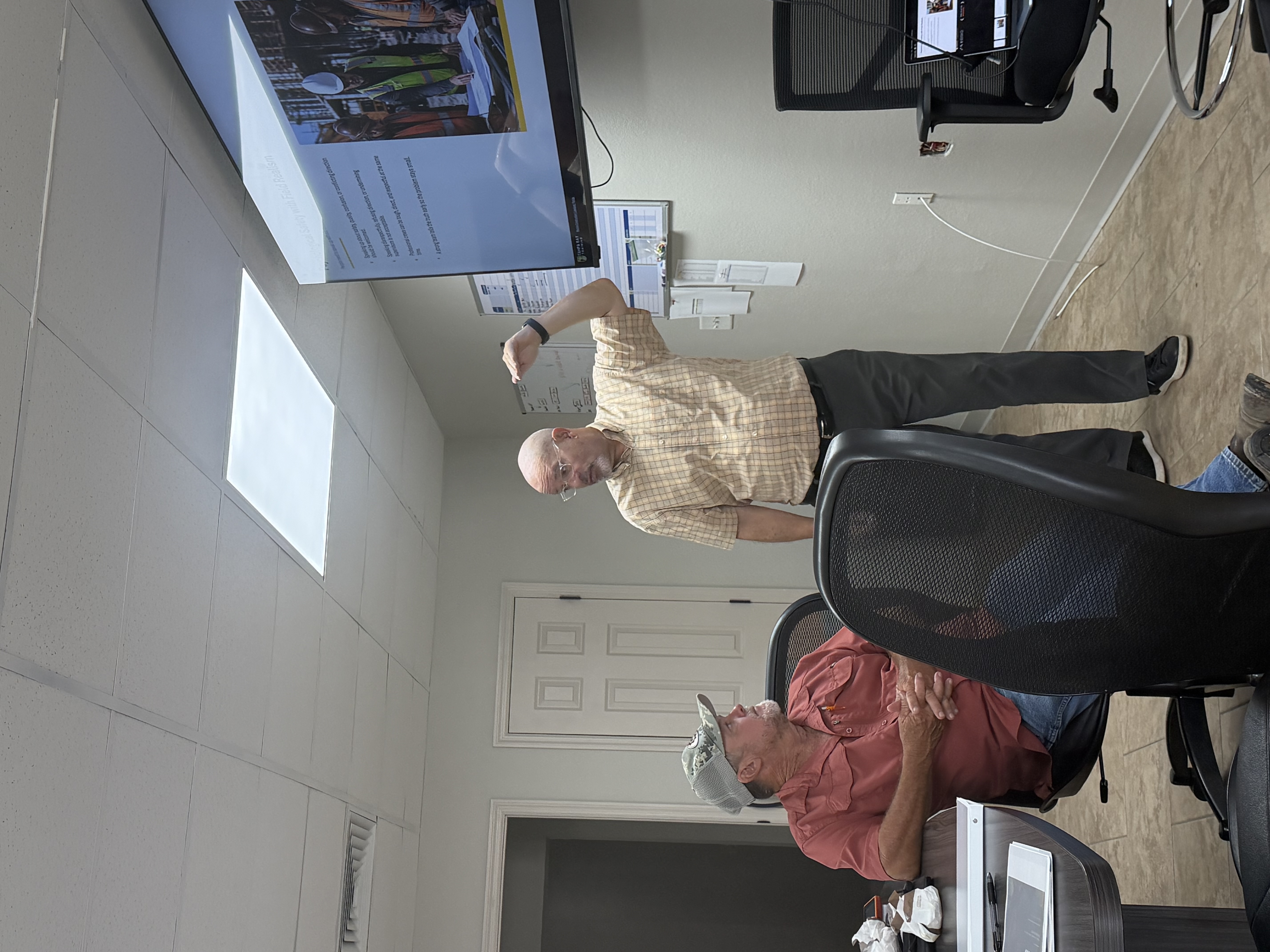
Primary Construction Subject-Matter Expert
Perry brings more than 40 years of construction, public-infrastructure, management, and workforce-development experience to practical instruction.
He helps participants connect written procedures to real roles, decisions, records, controls, and field conditions.
Meet Perry →Frequently asked questions
Not automatically. The course teaches and practices the development process. A finished organization-ready SOP normally requires additional validation, review, approval, implementation, and maintenance.
Often, yes, when agreed in advance and when the organization has permission to share an appropriately sanitized procedure, form, or workflow.
Potentially. Organization-specific development or review is a separate consulting engagement with agreed scope, responsibilities, deliverables, schedule, and price.
The client determines its authorized reviewers and approvers. Technical, legal, regulatory, safety, labor, procurement, IT, records, or professional review may be needed depending on the procedure.

Plan your SOP workshop
Tell Cindy your Florida location, preferred date, participant count, preferred course length (four or eight hours), and the roles of those attending. Let her know if you want to use a client process with confidential or sensitive details removed.
Policies & Customer Information
Practical workforce, safety, and leadership training for Florida local government, public works, utilities, engineering, construction, and infrastructure organizations.
© 2026 Tampa Bay Training All Rights Reserved | TBT Policies